Earthquake! 1300 years of research
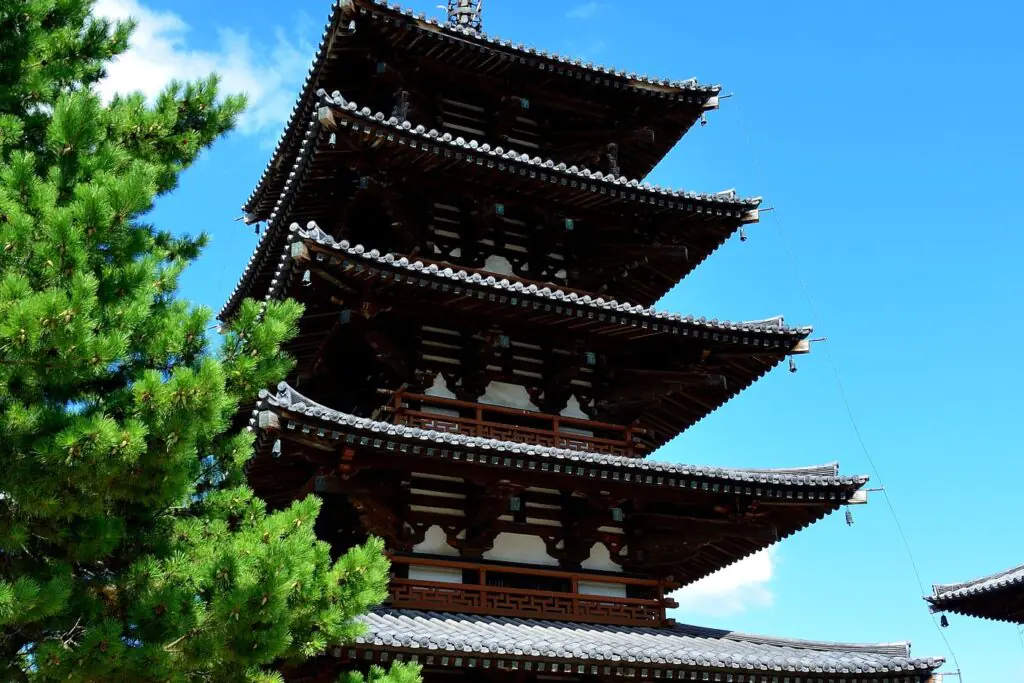
Horyuji Temple, the world’s oldest wooden structure, has attracted considerable attention. This building, which has survived a long history of approximately 1300 years, holds the secret to its longevity. Many people have the impression that wooden buildings do not last long. Japan is one of the most earthquake-prone countries in the world, so some people think that wooden buildings are weaker against impact compared to other materials. Furthermore, Japan is a humid country, so there is a risk of mold growth and deterioration of the building. Yet, Horyuji Temple has maintained its appearance for approximately 1300 years. Why has Horyuji Temple lasted so long? To unravel its secret, let’s first focus on its structure.
Focus on lumber!
The wood used in the structures of Horyuji Temple is said to be extremely strong. This is because it uses Japanese cypress (Hinoki), which boasts the highest level of durability and preservation among all types of wood. Furthermore, it is generally said that wood gradually increases in strength over 100 to 200 years after being cut down, and that its strength does not change much even after 1000 years.
Focus on earthquake-resistant building technologies!
In modern architecture, the term “earthquake-resistant structure” is often used, but Horyuji Temple seems to have a different structure. In Horyuji’s five-story pagoda, each floor is only loosely connected, and when earthquake vibrations are transmitted, the building moves as if riding the wave, absorbing the shaking. Furthermore, the five-story pagoda has a large central pillar called the “shin-bashira” (central pillar) that runs vertically through the center of the tower. It doesn’t directly support the weight of the floors and roofs of each level, but acts as a seismic isolation and vibration control device (like a see-saw adjusting balance) to suppress earthquake shaking. There are small gaps between the shin-bashira and each level, allowing each level to sway independently. While the five levels are a flexible structure without direct joints, to prevent each level from becoming too flexible, Japanese carpenters arrived at an ingenious solution: the shin-bashira.
The shin-bashira acts as a vibration damper; if the pagoda itself tries to tilt to the right, the shin-bashira moves to the left to maintain balance, thus reducing earthquake shaking. When the shaking is strong, the central column strikes the floor framing on each level, preventing lateral shaking that would cause collapse. In other words, it acts as a “pendulum” with sufficient mass, restraining the floor framing on each level from swaying too much. Therefore, it absorbs lateral shaking that would normally cause collapse by swaying itself, preventing collapse due to earthquakes. It can be said to be an architectural design that does not resist the laws of nature.
Showing the Shin-Bashira system
this seismic isolation technology of the central column is also being applied to the Tokyo Skytree (634m), which boasts the world’s tallest height as a radio tower and the third tallest height as a building.
Horyuji Temple is located in the town of Ikaruga in the Ikoma District of Nara Prefecture, Japan.
Back to Product Blog